
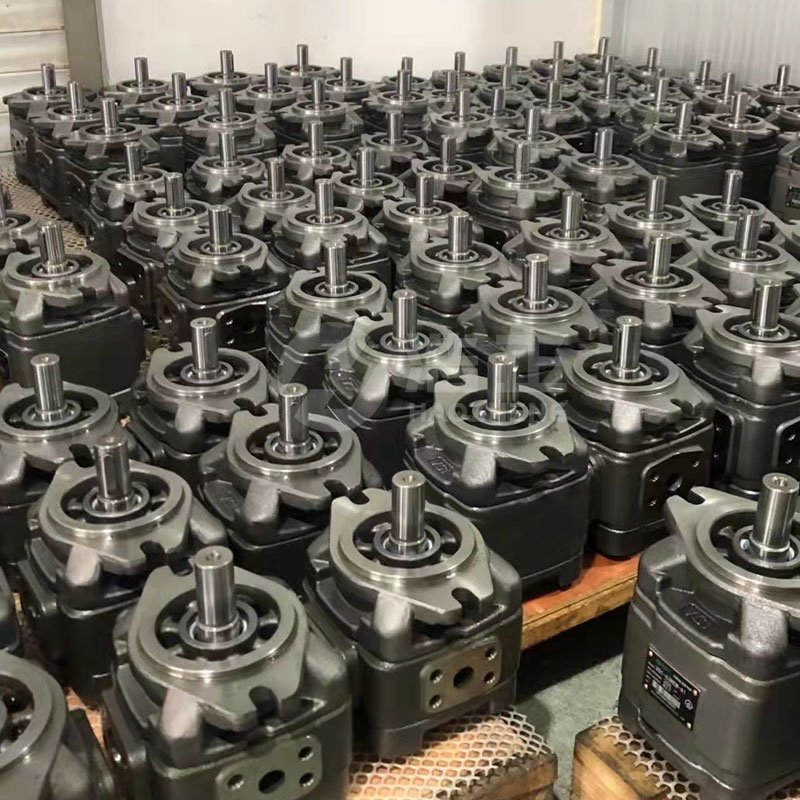
In positive displacement hydraulics, selecting the correct pump architecture is the foundation of system efficiency, acoustic control, and long-term operating costs. While both vane pumps and gear pumps serve as primary fluid power sources across industrial and mobile machinery, their internal fluid dynamics, pressure limits, noise profiles, and tolerance to contamination differ significantly.
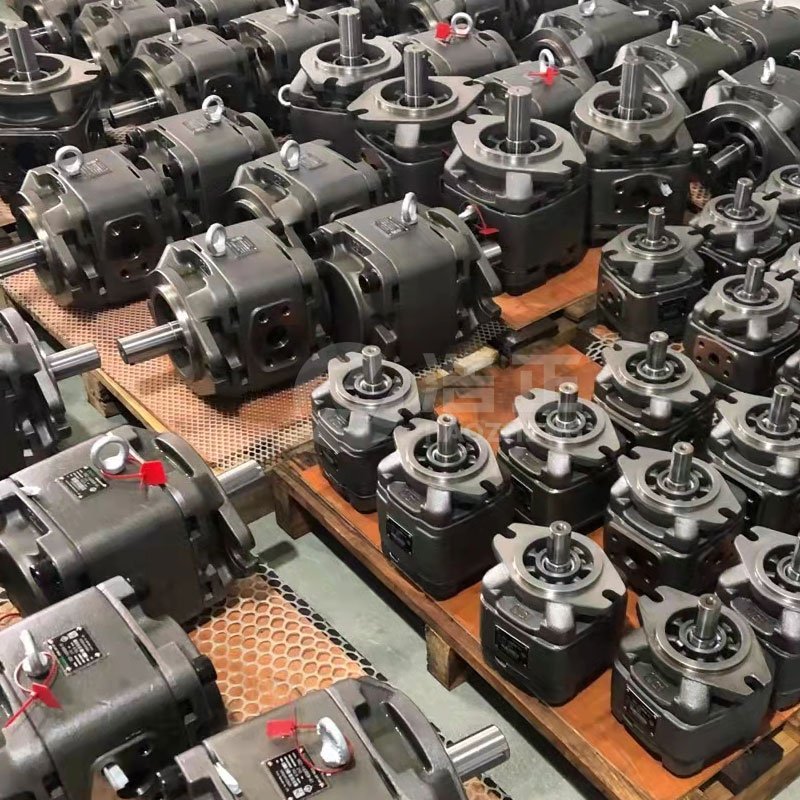
Understanding these technical distinctions is crucial for machinery OEMs, fluid power engineers, and maintenance managers looking to optimize performance.
As a premier manufacturer of high-precision hydraulic pumps and replacement components, Guangdong Haozheng Hydraulic Equipment Co., Ltd. manufactures both high-pressure gear pumps and low-noise vane pumps to power heavy machinery globally.
1. Mechanical Principles: How They Compare
To choose between a vane pump and a gear pump, one must first examine how each mechanical design displaces fluid.
[Vane Pump Interface] ──> Sliding Vanes in Eccentric Cam Ring ──> Ultra-Low Noise & Constant Flow
[Gear Pump Interface] ──> Interlocking Internal/External Gears ──> Extreme Durability & Contamination Resistance
Vane Pumps: Balanced & Low Noise
A hydraulic vane pump consists of a slotted rotor driven by a shaft inside an eccentric or oval-shaped cam ring. As the rotor turns, centrifugal force (or pressure loading) pushes rectangular vanes outward against the inner wall of the cam ring. This creates expanding and contracting chambers that draw in and discharge oil.
- Key Characteristic: Exceptional acoustic damping (extremely low noise levels) and virtually pulsation-free flow.
Gear Pumps: Robust & High Pressure
A gear pump relies on the meshing of two interlocking gears—an external drive gear and an idler gear (or internal gear arrangement)—to transfer fluid around the perimeter of the casing. As the gear teeth unmesh on the inlet side, a vacuum is created, pulling oil into the pump.
- Key Characteristic: Simple mechanical structure, high tolerance to oil contamination, and robust performance under severe shock pressures.
2. Technical Comparison Matrix: Vane Pump vs. Gear Pump
| Engineering Attribute | Hydraulic Vane Pumps | Hydraulic Gear Pumps |
| Operating Pressure | Medium to High (Up to ~210–280 bar) | High to Very High (Up to ~250–300+ bar) |
| Acoustic Level (Noise) | Ultra-Low (Ideal for indoor plants) | Moderate to High |
| Contamination Tolerance | Sensitive (Requires clean oil, ISO 18/16/13) | High (Tolerates particulate contamination better) |
| Volumetric Efficiency | High (Maintained via wear-compensating vanes) | Moderate to High (Subject to gear-side clearance wear) |
| Flow Pulsation | Minimal (Provides precise actuator control) | Higher flow ripple |
| Maintenance & Service | Replaceable cartridge kit designs | Complete unit overhaul or gear housing re-machining |
3. Targeted Machinery & Field Application Scenarios
The operational characteristics of each pump dictate where they are deployed across industrial plants and mobile heavy equipment:
Where Vane Pumps Excel:
Because of their silent operation and steady, ripple-free flow, vane pumps are heavily utilized in indoor industrial environments and precision machine tools:
- Plastic Injection Molding Machines: Requires whisper-quiet operation in factory settings and smooth clamp positioning.
- Metal Stamping Presses & CNC Machine Tools: Provides pulsation-free hydraulic power for smooth spindle and slide movements.
- Automotive Testing Equipment: Ensures silent operation during long duty-cycle testing sequences.
Where Gear Pumps Excel:
Because of their rugged nature, compact footprint, and ability to handle dirty operational environments, gear pumps dominate outdoor mobile construction and agricultural machinery:
- Agricultural Tractors & Combine Harvesters: Powers hydraulic lifts, steering, and auxiliary drives amidst heavy dust and field debris.
- Mobile Construction Machinery (Excavators, Loaders, Forklifts): Ideal for engine-driven main or auxiliary fluid lines subject to severe vibration.
- Dump Trucks & Refuse Vehicles: Handles frequent start-stop cycles and fluctuating oil temperatures without structural fatigue.
4. Guangdong Haozheng: Complete Solutions for Vane & Gear Applications
Whether your hydraulic system demands the whisper-quiet fluid delivery of a vane pump or the rugged durability of a high-pressure gear pump, Guangdong Haozheng Hydraulic Equipment Co., Ltd. delivers field-proven performance.
Our manufacturing facility combines multi-axis CNC machining centers, sub-micron bore honing, and advanced surface heat treatments to produce high-grade complete pump units and drop-in replacement parts for world-leading brands (including Rexroth, Parker, Eaton Vickers, and Komatsu).
Our Core Hydraulic Product Offerings:
- High-Performance Vane Pump Series: Featuring flexible single, double, and triple cartridge kits. Our engineered vane profiles maintain tight contact against the cam ring, delivering volumetric efficiencies exceeding 92% with ultra-low operating decibels.
- Heavy-Duty Gear Pump Series: Manufactured with high-strength cast iron or extruded aluminum housings, our gear pumps feature wear-compensating pressure plates that minimize internal bypass under continuous high pressures.
- 100% Dynamic Load Testing: Every vane and gear pump that leaves our production line is tested on high-power digital test benches to certify pressure holding, volumetric output, and temperature parameters.
Conclusion: Which Pump Should You Choose?
When deciding between a vane pump and a gear pump:
- Choose a Vane Pump if your priority is low noise, precise flow control, and indoor plant operation where oil cleanliness can be strictly maintained.
- Choose a Gear Pump if your priority is rugged durability, high resistance to fluid contamination, cost-effective initial investment, and harsh outdoor operating environments.
For B2B procurement managers, equipment manufacturers, and global hydraulic distributors looking for top-tier manufacturing quality and rapid factory-direct supply, Guangdong Haozheng Hydraulic Equipment Co., Ltd. provides the exact fluid power solution your equipment requires.