
In heavy industrial operations, construction fleets, and agricultural equipment management, proper fluid selection is the foundation of machine longevity. While both engine oil and hydraulic oil are petroleum- or synthetic-based fluids circulating within heavy machinery, their chemical formulations, additive packages, and core functional roles are fundamentally different.
A common and costly mistake made in field maintenance is treating these two fluids as interchangeable. Substituting engine oil for hydraulic oil—or vice versa—can lead to severe internal component damage, rapid seal degradation, and costly downtime.
Understanding these technical distinctions is crucial for fleet managers, maintenance engineers, and procurement specialists. As a premier global manufacturer of high-pressure hydraulic pumps, motors, and precision replacement components, Guangdong Haozheng Hydraulic Equipment Co., Ltd. breaks down the mechanical principles, chemical contrasts, and application boundaries between these two vital industrial fluids.
1. Core Physics: Power Transfer vs. Internal Combustion Protection
The primary difference between engine oil and hydraulic oil lies in their core engineering purpose:
[Engine Oil]    ──> Focus: Lubrication, Heat Absorption & Neutralizing Combustion Byproducts
[Hydraulic Oil] ──> Focus: Incompressible Energy Transfer, Rapid Air Separation & Film Shear Strength
Hydraulic Oil: Non-Compressible Power Transmission
Hydraulic oil is an energy transfer medium. Its primary function is to transmit hydrostatic pressure across a closed-loop system—from the primary hydraulic pump to actuators such as cylinders and motors.
- Key Characteristics: High anti-wear (AW) properties, high shear stability, fast air-release capability, excellent water demulsibility (separating oil from water), and anti-foaming properties. Hydraulic oil is engineered to resist compression under continuous pressures exceeding $350\text{ bar}$ ($5,076\text{ PSI}$).
Engine Oil: High-Thermal Combustion Protection
Engine oil is a lubricating and cleaning medium. Its primary function is to reduce friction between high-speed moving parts inside an internal combustion engine (pistons, crankshafts, camshafts) while withstanding extreme heat and contamination from fuel combustion.
- Key Characteristics: High concentrations of detergent and dispersant additives designed to suspend soot, ash, and unburned fuel particles, combined with alkaline additives (TBN – Total Base Number) to neutralize acidic combustion gases.
2. Technical Comparison Matrix: Engine Oil vs. Hydraulic Oil
| Chemical / Physical Parameter | Hydraulic Oil (e.g., ISO VG 32, 46, 68) | Engine Oil (e.g., SAE 10W-30, 15W-40) |
| Primary Functional Purpose | Energy and power transmission. | Hydrocarbon friction reduction and engine cleaning. |
| Detergent / Dispersant Level | Very Low to Zero (Water and contaminants must settle to the bottom of the tank). | Extremely High (Holds soot, dirt, and carbon in suspension until filtered). |
| Water Separation (Demulsibility) | High (Quickly sheds water to prevent corrosion and pump cavitation). | Low (Emulsifies small amounts of moisture to prevent free water in engine blocks). |
| Foam / Air Release Rate | Ultra-Fast (Essential to prevent sponge-like actuator response and pump cavitation). | Moderate (Designed for engine sump aeration levels). |
| Viscosity Index System | ISO Viscosity Grade (ISO VG). | SAE Grade (Society of Automotive Engineers). |
Critical Maintenance Warning: Never run standard engine oil in a precision hydraulic circuit unless explicitly specified by the equipment manufacturer (e.g., specialized CAT TO-4 specifications). The high detergent additives in engine oil will trap water and micro-particulates in suspension, turning the hydraulic oil cloudy, corroding bimetallic valve plates, and accelerating pump wear.
3. Targeted Machinery & Operational Scenarios
Understanding where each fluid operates is essential for maintaining equipment uptime across complex fleets:
Where Hydraulic Oil Operates:
Hydraulic oil powers the fluid power network across high-pressure industrial and mobile equipment:
- Hydraulic Excavators & Cranes: Transmits fluid force to extend booms, curl buckets, and turn swing drives.
- Plastic Injection Molding Presses: Drives high-tonnage clamping cylinders and precision injection units.
- Mining Drill Rigs & Tunneling Equipment: Powers high-torque hydraulic motors and percussion hammers.
- Agricultural Tractors & Combine Harvesters: Operates three-point hitches, hydrostatic steering, and hydraulic fan drive systems.
Where Engine Oil Operates:
Engine oil is confined exclusively to the internal combustion engine (ICE) crankcase:
- Diesel engines powering heavy crawler dozers, wheel loaders, and dump trucks.
- Gas and diesel power generators powering remote job sites.
- Auxiliary engine units on agricultural harvesters and mobile concrete pumps.
4. Guangdong Haozheng: Ensuring Hydraulic System Longevity
Because hydraulic oil operates under extreme fluid shear and tight mechanical boundaries, even minor oil degradation or particulate contamination will cause severe wear on internal pump components.
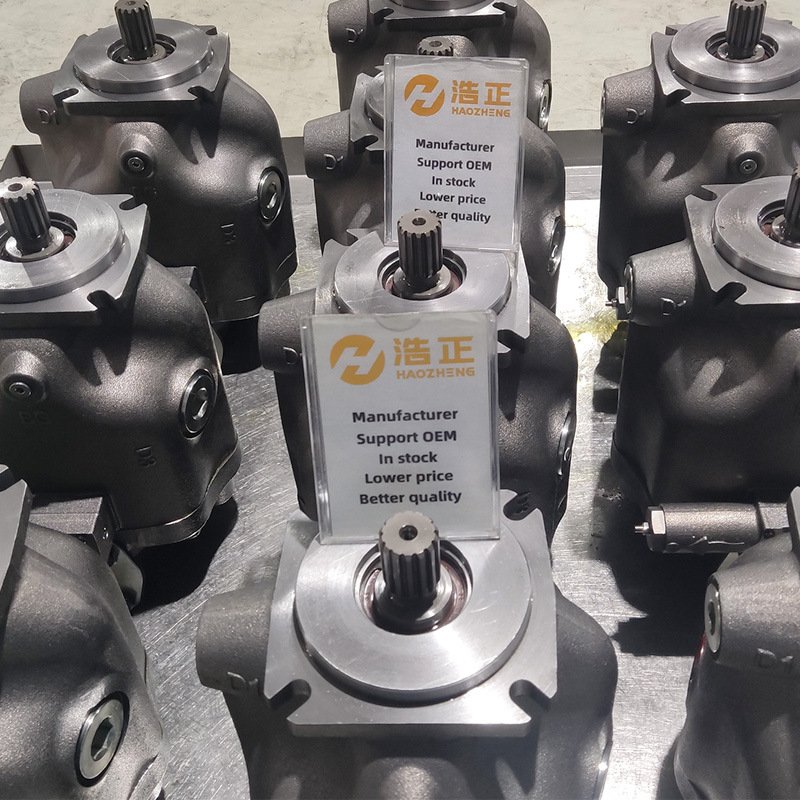
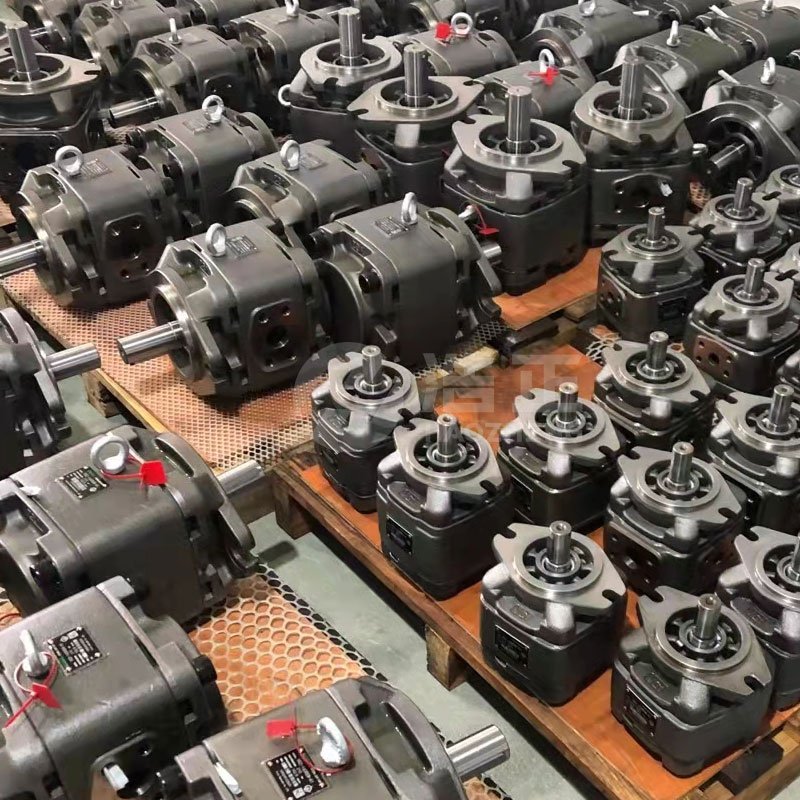
At Guangdong Haozheng Hydraulic Equipment Co., Ltd., we manufacture precision axial piston pumps, hydraulic motors, control valves, and internal replacement parts (including cylinder blocks, pistons, valve plates, and swashplates) engineered to handle maximum working pressures.
[Haozheng Component Integrity Standard]
Sub-Micron Bore Honing ──> Nitrocarburized Hardening ──> Bimetallic Wear Bonding ──> 100% Dynamic Bench Certification
The Haozheng Engineering Standard:
- Sub-Micron Precision Tolerances: We control the internal clearances between our replacement pump pistons and cylinder bores to within $5 – 8\text{ microns}$. Maintaining clean, correctly specified hydraulic oil ensures these tight clearances remain free from abrasive scoring, preserving a volumetric efficiency greater than 95%.
- Bimetallic Wear Protection: Our replacement valve plates and piston slipper heads feature advanced bimetallic copper-steel bonding, significantly reducing friction coefficients even under high fluid temperatures.
- 100% Full-Load Bench Validation: Every complete pump assembly and rotary component built by Haozheng undergoes mandatory dynamic pressure-cycling tests on our digital test stands before global dispatch.
Conclusion
While engine oil and hydraulic oil share petroleum roots, they are engineered for opposite physical roles. Engine oil relies on heavy detergents to clean internal combustion environments, whereas hydraulic oil requires clean water-separation and rapid air-release capabilities to transmit fluid energy without compressibility loss. Maintaining strict separation between these fluids is vital to protecting high-pressure pumps and actuators.
For B2B procurement managers, heavy equipment fleet operators, and global hydraulic distributors looking for top-tier manufacturing quality, precision replacement pumps, and field-proven parts, Guangdong Haozheng Hydraulic Equipment Co., Ltd. delivers factory-direct economics backed by uncompromising engineering standards.