
Understanding Hydraulic Pumps: Working Principles and Applications
9/26/20251 min read
Introduction to Hydraulic Pumps
Hydraulic pumps are essential components in various mechanical systems, playing a crucial role in converting mechanical energy into hydraulic energy. They are pivotal in driving machines and equipment in numerous industries, making basic knowledge of hydraulic pumps important for anyone in engineering or industrial sectors.
Working Principle of Hydraulic Pumps
The fundamental principle behind hydraulic pumps lies in Pascal's Law, which states that pressure exerted on a confined fluid is transmitted undiminished throughout the fluid. Hydraulic pumps operate by creating a flow of fluid, which subsequently creates pressure. This pressure can then be used to perform work, such as lifting heavy loads or moving machinery components.
There are various types of hydraulic pumps, including gear pumps, vane pumps, and piston pumps, each operating on distinct principles. Gear pumps, for instance, use interlocking gears to move fluid, while vane pumps utilize rotating vanes to achieve fluid movement. Understanding these basic designs allows for better application in mechanical equipment.
Applications of Hydraulic Pumps in Mechanical Equipment
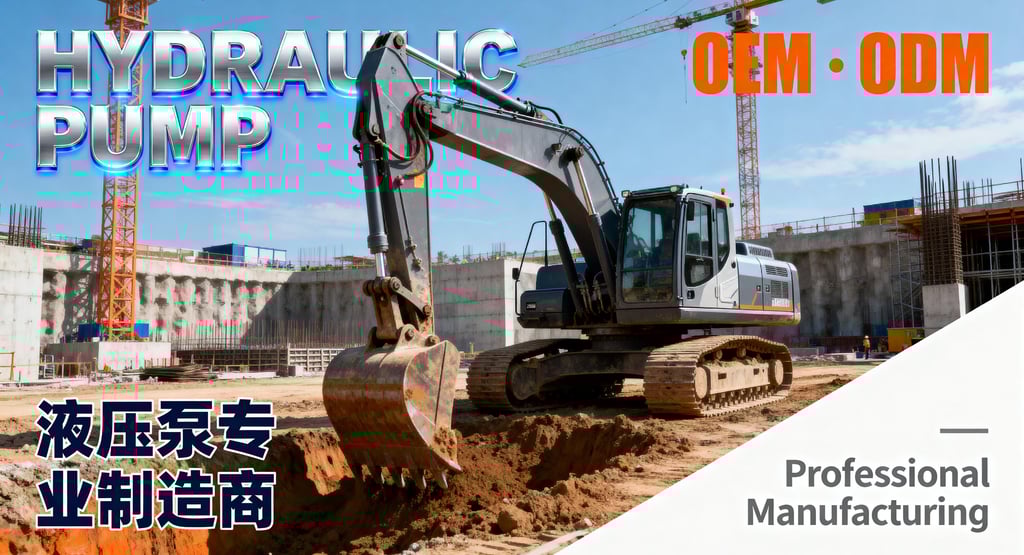
Hydraulic pumps are extensively used in multiple applications across different sectors. They are found in construction equipment, such as excavators and bulldozers, where they help lift and move heavy materials efficiently. Additionally, hydraulic pumps are critical in manufacturing processes, powering machines and assembly lines.
Moreover, they play a significant role in automotive systems, including brake and power steering systems, delivering the necessary force for the system to operate correctly. The versatility of hydraulic pumps also extends to mobile applications, such as forklifts and agricultural machinery, thereby showcasing their pivotal role in modern industrial mechanics.
Conclusion
In conclusion, a basic understanding of hydraulic pumps, including their working principles and diverse applications, is essential for professionals across various fields. By grasping how these pumps function, one can appreciate their significance in enhancing the efficiency and effectiveness of mechanical equipment. As technology advances, the role of hydraulic pumps will undoubtedly continue to evolve, reinforcing their importance in the mechanical industry.
HAOZHENG Hydraulics
Innovative solutions for hydraulic equipment and parts.
Contact
Support
+86-17396452406
© 2025. All rights reserved.