
Radial piston pumps power ultra-high-pressure hydraulic systems. In fact, engineers choose them for extreme continuous loads and pulse-free flow. An axial pump aligns its pistons parallel to the shaft. In contrast, a radial piston pump positions its plungers perpendicularly.
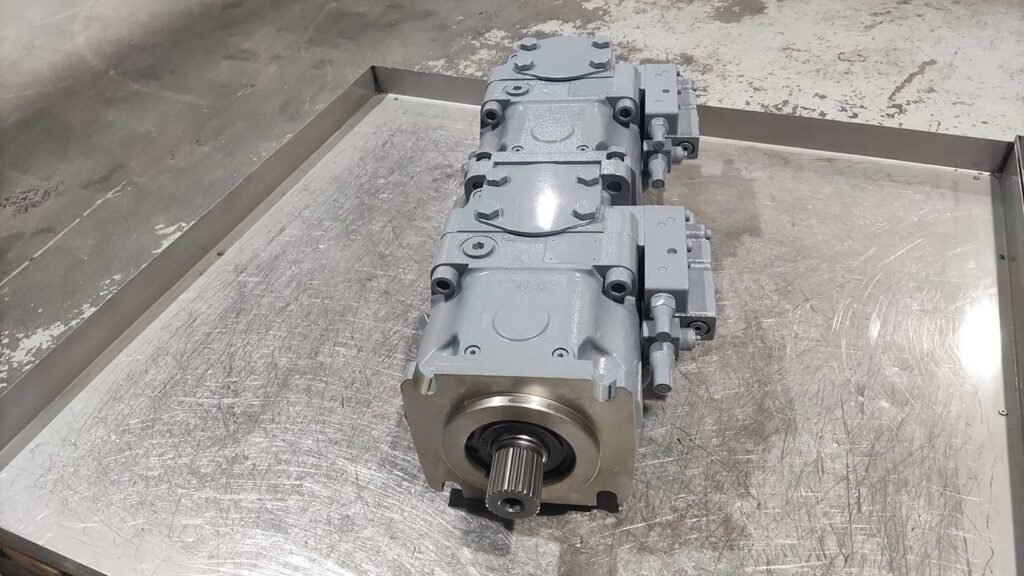
This radial design allows these pumps to operate reliably under extreme working pressures from 350 bar to 700+ bar. Therefore, they drive heavy industrial presses, hydraulic power units (HPUs), and heavy clamping systems.
Selecting or servicing high-pressure radial piston pumps requires a clear understanding of cam mechanics and metallurgy.
This technical guide covers internal operating principles and machinery scenarios. Furthermore, it highlights direct-factory supply from Guangdong Haozheng Hydraulic Equipment Co., Ltd.
1. Radial Piston Pump Mechanics: Valve-Controlled vs. Journal-Controlled
An eccentric shaft or cam ring drives reciprocating plunger motion in radial piston pumps. Specifically, manufacturers build them in two primary mechanical configurations:
                      [Radial Piston Pump Configurations]
                                       │
       ┌───────────────────────────────┴───────────────────────────────┐
       ▼                                                               ▼
[Valve-Controlled (Check Valve Design)]                [Journal-Controlled (Rotary Valve Design)]
  • Independent check valves per cylinder                • Central pintle valve controls suction/porting
  • Ultra-high pressure limits (up to 700 - 1000 bar)   • Hydrodynamically balanced eccentric cam ring
  • Ideal for heavy presses & clamping tools             • Smooth flow output at variable speeds
Core Mechanical Advantages:
- Extreme Pressure Capability: Check valves isolate each cylinder chamber individually. Therefore, radial designs eliminate internal pressure bypass and reach working pressures above 700 bar.
- High Hydrodynamic Balance: Plungers sit symmetrically around the central drive shaft. As a result, this balance distributes radial loads evenly and extends main bearing life.
- Low Noise and Reduced Pulsation: Multi-plunger radial layouts produce smooth pressure output. Consequently, these pumps reduce hydraulic line vibration and acoustic emissions in factories.
2. Technical Evaluation & Engineering Selection Matrix
Fluid power engineers evaluate critical performance metrics when selecting or replacing radial piston pumps:
| Technical Parameter | Operational Impact | Industry Benchmarks |
| Operating Pressure Rating | Sets maximum continuous vs. peak pressure limits | Standard: 350 bar, Heavy Industrial: 700 bar continuous |
| Displacement Range | Measures fixed or variable output volume per rev | Compact 0.5 to 12 cc/rev up to industrial 140 to 250 cc/rev |
| Volumetric Efficiency | Compares actual fluid discharge to theoretical output | 95% to 98% maintained under high fluid viscosities |
| Fluid Compatibility | Determines ability to run synthetic or HFC fluids | Specialized bimetallic linings resist fluid shear |
3. Heavy Machinery Applications & Industry Scenarios
Radial piston pumps maintain structural integrity under extreme working pressures. Therefore, industrial facilities deploy them across high-demand sectors:
[Haozheng High-Pressure Radial & Axial Solutions]
 ├── Industrial Manufacturing ──> Hydraulic Forging Presses, Stamping Machinery & Injection Molding
 ├── Material Handling ─────────> Heavy Lifting Systems, Cable Pullers & Hydraulic Jacks
 ├── Machine Tools & Testing ───> High-Pressure Clamping Fixtures & Hydrostatic Test Benches
 └── Energy & Heavy Industry ───> Oilfield Wellhead Control Panels & Mining Support Units
Machinery Breakdown:
- Hydraulic Forging & Stamping Presses: Radial piston pumps provide high hold-down force during severe metal-forming operations. As a result, they succeed where lower-pressure pumps fail.
- Hydrostatic Test Rigs & Jacking Equipment: Check-valve radial pumps generate controlled pressure spikes up to 700 bar. Therefore, technicians easily pressure-test pipe welds and heavy lifting cylinders.
- Machine Tool Clamping Systems: Compact multi-element radial pumps provide low-flow, high-pressure oil. Consequently, they keep workpiece clamps locked firmly during heavy milling operations.
4. The Haozheng Solution: High-Pressure Manufacturing & Test Bench OEM
Sourcing high-pressure hydraulic pumps requires sub-micron machining and verified load testing.
Guangdong Haozheng Hydraulic Equipment Co., Ltd. delivers factory-direct engineering across a full range of high-pressure hydraulic components. Specifically, we manufacture complete hydraulic pumps, hydraulic motors, precision replacement rotating parts, and universal hydraulic test benches (75kW to 320kW series).
[Haozheng Direct-Factory Quality Framework]
Sub-Micron Plunger Grinding ──> Vacuum Heat Treatment ──> Bimetallic Wear Bonding ──> Full Load-Bench Testing
Why Global Fluid Power Partners Work with Guangdong Haozheng:
- Precision Sub-Micron Machining: We grind and lap plungers, cylinder bores, and valve seats to sub-micron tolerances. Therefore, our parts eliminate internal bypass and maintain volumetric efficiency above 95%.
- Extreme-Duty Metallurgy: Wear components undergo vacuum heat treatment and bimetallic bronze bonding. As a result, parts resist micro-cavitation under continuous high-pressure loads.
- Mandatory Factory Load-Bench Validation: We test every pump up to full working pressure on our computerized test stands before export.
- Custom Hydraulic Test Stand Supply: In addition, Haozheng designs automated universal hydraulic test benches with digital data logging for repair centers worldwide.
Conclusion
A radial piston pump delivers exceptional pressure capability, low noise, and continuous high-force output. Therefore, selecting high-precision components backed by full-load testing is essential for maximum productivity. Partnering directly with Guangdong Haozheng Hydraulic Equipment Co., Ltd. delivers factory-direct engineering excellence, rapid delivery turnarounds, and long-term operating performance.