
In the heavy industrial, mobile construction, and aerospace sectors, system fluid power is only as dependable as the pump that generates it. Modern high-pressure machinery demands units capable of withstanding continuous operational stresses exceeding $350\text{ bar}$ ($5,076\text{ PSI}$) while executing millions of cycles with zero drop in volumetric efficiency. Achieving this level of fluid power reliability requires an extraordinary level of expertise in hydraulic pumps manufacturing.
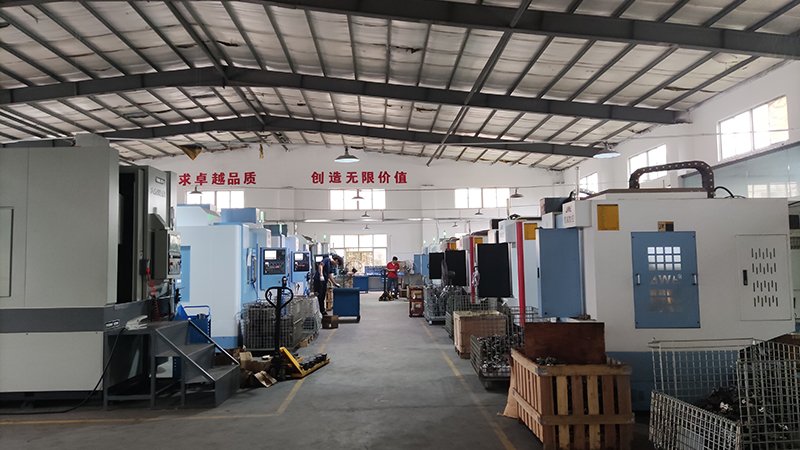
True precision manufacturing goes far beyond basic metal casting and assembly. It requires a flawless blend of sub-micron machining, advanced bimetallic metallurgy, and specialized thermal treatments.
This comprehensive B2B guide explores the core engineering stages of elite hydraulic pumps manufacturing, critical component tolerances, and what procurement managers must verify when evaluating a global manufacturing partner.
1. The Core Stages of the Hydraulic Pumps Manufacturing Process
The production line of an industrial-grade hydraulic pump—whether an axial piston, high-pressure gear, or heavy-duty vane design—relies on a series of tightly controlled manufacturing phases:
[Melt & Casting] ──> [CNC Multi-Axis Machining] ──> [Thermal Hardening] ──> [Micro-Lapping/Honing] ──> [Dynamic Testing]
Phase A: Heavy-Duty Metallurgy and Housing Casting
The external pump housing must endure massive pressure spikes without experiencing structural flexing or casing leaks. Premium manufacturers utilize high-tensile ductile iron (such as QT500 or specialized nodular iron grades) cast via automated molding systems to eliminate internal porosity and micro-voids.
Phase B: Multi-Axis CNC Machining
Internal core rotating components—specifically the cylinder blocks, pistons, and swashplates—are routed through ultra-precise 5-axis CNC machining centers. Here, mechanical shapes are cut into high-alloy steels under strict temperature-controlled cleanroom conditions to prevent thermal expansion from distorting tool geometry.
Phase C: Advanced Heat Treatment and Nitriding
To survive abrasive particulate wear and continuous fluid shear, component surfaces undergo specialized heat treatments. Techniques like gas nitriding, liquid nitrocarburizing, or vacuum induction hardening create an ultra-hard outer crust (frequently exceeding $HRC\ 60$) while preserving a tough, flexible core that resists structural cracking under cyclical shocks.
2. The Micron Domain: Critical Manufacturing Tolerances
The boundary between an elite, high-efficiency pump and a sub-par unit comes down to clearances measured in single-digit microns. In hydraulic pumps manufacturing, failure to control these clearances leads to catastrophic fluid slippage and rapid thermal breakdown.
1.Piston-to-Cylinder Radial Clearances:Bore Honing。
The radial gap between a pump piston and its corresponding cylinder barrel bore must be held tightly between $5 – 8\text{ microns}$. If the gap is too narrow, thermal expansion causes the piston to seize. If it is too wide, high-pressure oil leaks backward into the pump case, dropping volumetric efficiency below the acceptable 90% threshold.
2.Valve Plate Flatness and Parallelism:Micro-Lapping。
The mating faces between the rotating cylinder block and the stationary valve plate are subjected to high-speed diamond micro-lapping. The surface flatness across this plane must be uniform to within $\le 2\ \mu\text{m}$ with a mirror-like finish ($Ra \le 0.1\ \mu\text{m}$), ensuring an absolute hydraulic seal under full load.
3.Slipper Pad Ball-Joint Fitment:Spherical Grinding。
The spherical swaging process that locks the bronze slipper pad onto the steel piston head requires absolute geometric precision. Any clearance play greater than $10\text{ microns}$ will cause the pad to chatter, leading to slipper separation and total pump destruction at high RPMs.
3. The Bimetallic Innovation: Overcoming High-Velocity Friction
One of the greatest milestones in modern hydraulic pumps manufacturing is the mastering of bimetallic material bonding. When a steel piston slipper slides against a steel swashplate at linear speeds exceeding $5\text{ m/s}$ under immense pressure, a mono-material interface would instantly weld itself together.
To solve this, advanced factories like Guangdong Haozheng Hydraulic Equipment Co., Ltd. utilize specialized bimetallic fusion technology:
| Component Interface | Substrate Material | Fused Surface Layer | Functional Advantage |
| Piston Slipper Heads | High-tensile structural steel | High-tin lead chemical bronze | Minimizes friction coefficient; prevents galling during cold starts. |
| Cylinder Block Face | Hardened alloy steel | Sintered bimetallic copper alloy | Provides excellent thermal dissipation; resists cavitation pitting. |
| Cradle Liner Bearings | Reinforced steel backing | Low-friction composite polymer matrix | Delivers smooth swashplate angling response times under full load. |
4. Haozheng Hydraulic: Precision Manufacturing Built for Global Supply
Sourcing high-end hydraulic pumps and internal rotating components from traditional OEM giants frequently exposes global distributors, heavy equipment fleets, and repair workshops to intense operational bottlenecks: rigid pricing structures and protracted supply chain lead times.
At Guangdong Haozheng Hydraulic Equipment Co., Ltd., we have optimized our dedicated hydraulic pumps manufacturing infrastructure to supply the global market with world-class, 100% direct drop-in alternative pump units and parts. Our capabilities cover perfect replacements for the world’s most trusted series, including Bosch Rexroth (A10VSO, A4VSO, A4VG), Parker (PV/PD), Eaton Vickers, and Sauer-Danfoss.
The Haozheng Manufacturing Standard:
- Digital Test Bench Validation: We don’t ship on assumptions. Every complete pump assembly undergoes rigorous full-load dynamic verification on our automated, digitally monitored testing benches to certify real-time flow rate, pressure holding, and case drain temperature parameters.
- 1:1 Interchanging Precision: Our parts are engineered directly from absolute geometric blueprints. Mounting flanges, spline shafts, port configurations, and internal valves match OEM specifications flawlessly for immediate field installation.
- Agile B2B Logistics: By combining high-capacity raw material reserves with lean CNC manufacturing practices, Haozheng slashes traditional lead times from months down to days, maximizing your fleet uptime and inventory turnover.
Conclusion
High-tier hydraulic pumps manufacturing is an demanding engineering discipline where sub-micron accuracy, specialized metallurgy, and rigorous dynamic validation dictate system power. For procurement specialists and industrial rebuilders, ensuring your production partner masters these micro-tolerances is the only way to safeguard your machinery from premature field failure.
For global fluid power distributors, heavy machinery operators, and industrial repair centers seeking OEM-level operational lifespans combined with direct factory-direct economics, partnering with Guangdong Haozheng Hydraulic Equipment delivers the ultimate competitive manufacturing advantage.