
A pneumatic piston pump uses compressed air to drive a reciprocating piston assembly. In heavy industry, this design converts low air pressure into high hydraulic or fluid delivery force.
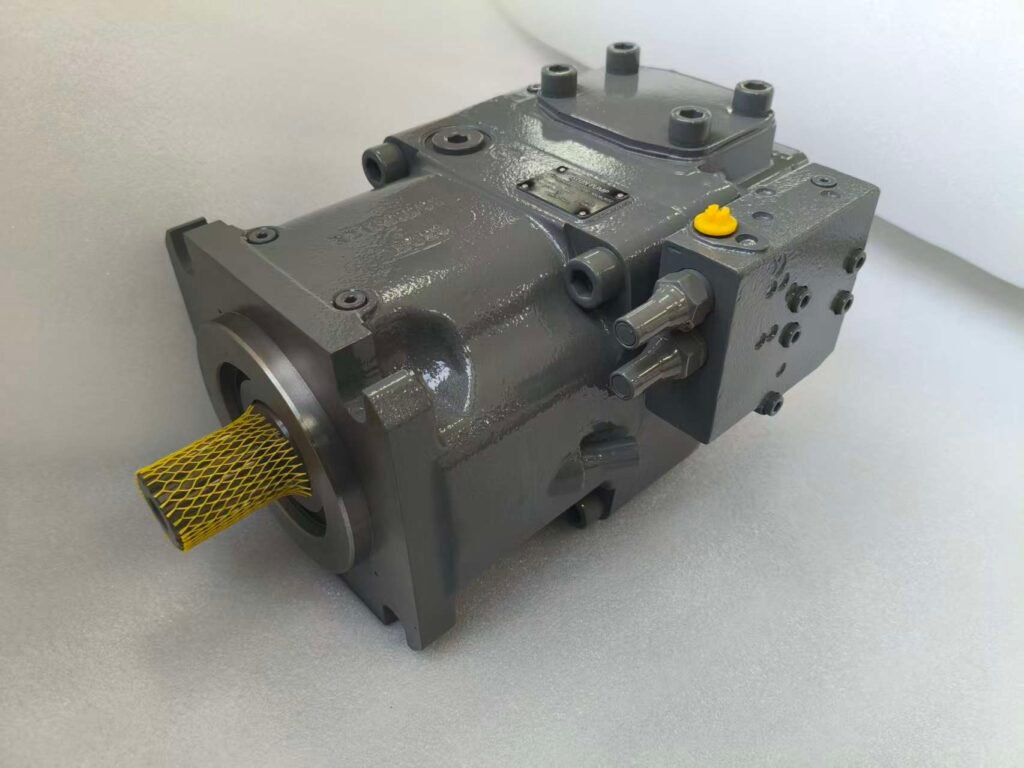
Engineers frequently specify pneumatic piston pumps in hazardous or explosive environments. Because compressed air powers these units, they eliminate electrical spark risks entirely. Furthermore, these pumps deliver steady fluid flow under demanding working pressures.
Understanding how pneumatic piston pumps work helps engineering teams select the right fluid power components for heavy machinery and industrial plants.
This technical guide explains pneumatic piston pump mechanics, key application scenarios, and how direct-factory manufacturing from Guangdong Haozheng Hydraulic Equipment Co., Ltd. supports global industry needs.
1. Operating Mechanics: How Pneumatic Piston Pumps Work
A pneumatic piston pump operates using a dual-chamber mechanical system. Compressed air enters the air motor section, driving an air piston back and forth. This linear movement transfers directly to a fluid piston in the lower pumping section.
[Compressed Air Supply]
           │
           ▼
 [Pneumatic Air Motor]
           │
           ▼
[Reciprocating Air Piston] ──> [Fluid Displacement Piston] ──> [High-Pressure Fluid Output]
Key Mechanical Advantages:
- Air-To-Fluid Ratio Amplification: The air piston surface area is larger than the fluid piston surface area. Consequently, a modest 6 bar air supply generates high fluid output pressures up to 350+ bar.
- Automatic Stall Capability: The pump automatically stalls when outlet pressure equals the pneumatic driving force. As a result, the pump holds system pressure without consuming energy or generating heat.
- Explosion-Proof Design: Compressed air powers the entire mechanical movement. Therefore, pneumatic piston pumps operate safely in flammable, volatile, or humid work environments.
2. Technical Evaluation & Selection Parameters
When specifying pneumatic piston pumps for industrial machinery or fluid transfer, engineers evaluate critical performance parameters:
| Technical Parameter | Operational Impact | Industry Benchmarks |
| Pressure Ratio (e.g., 10:1 to 65:1) | Multiplies input air pressure to output fluid pressure | 6 bar air produces 60 to 390+ bar fluid output |
| Volumetric Efficiency | Measures delivered fluid output against theoretical displacement | 95% or higher under full working loads |
| Piston Seal Metallurgy | Resists severe fluid shear and chemical degradation | Precision-ground alloy steel with Viton/FKM seals |
| Cycle Speed Control | Controls output volume by regulating input air flow | Adjusts smoothly from slow metering to rapid transfer |
3. Targeted Machinery and Industrial Applications
Pneumatic piston pumps drive essential fluid transfer and hydraulic functions across diverse industries:
[Haozheng High-Pressure Fluid Power Solutions]
 ├── Heavy Construction ────> Excavators, Mobile Cranes & Concrete Pumping Trucks
 ├── Industrial Automation ───> Plastic Injection Molding Machines & Stamping Presses
 ├── Mining & Tunneling ──────> Underground Rock Drill Rigs & Tunnel Boring Machines (TBM)
 └── Marine & Offshore ──────> Deck Winches, Anchor Capstans & Subsea Tools
Application Breakdown:
- High-Pressure Grease & Fluid Injection: Maintenance crews use pneumatic piston pumps to inject thick lubricants into heavy excavator joints and crane bearings. Consequently, machines run smoothly under heavy loads.
- Underground Drill Rigs & Mining: Mining engineers deploy air-operated pumps in underground tunnels. Therefore, crews pump slurry and water safely without electrical hazardous risks.
- Heavy Mobile Construction: Main hydraulic systems (such as Rexroth A10VSO/A4VG, Kawasaki K3V, Komatsu HPV, and CAT SBS series) rely on precise displacement controls. Thus, excavators achieve smooth multi-function digging power.
4. The Haozheng Solution: Direct Manufacturing & Test Bench OEM
Sourcing specialized pneumatic and hydraulic piston pumps often presents challenges with long lead times, steep markup pricing, or unverified aftermarket quality.
Guangdong Haozheng Hydraulic Equipment Co., Ltd. combines sub-micron manufacturing with direct factory distribution. Specifically, we produce complete axial piston pumps, hydraulic motors, replacement rotating groups (cylinder blocks, pistons, valve plates, swashplates, ball guides), and universal hydraulic test benches (75kW to 320kW series).
[Haozheng Production Infrastructure]
Sub-Micron CNC Grinding ──> Vacuum Heat Treatment ──> Bimetallic Wear Bonding ──> Full Load-Bench Testing
Why Global Partners Choose Guangdong Haozheng:
- 100% Direct Drop-In Interchangeability: Our complete pumps and internal parts match OEM dimensions exactly for major global brands. For instance, we support Bosch Rexroth (A10VSO, A4VG, A11VO, A7VO), Parker (PV/PD), Eaton Vickers, Sauer-Danfoss, Komatsu, CAT, and Kawasaki.
- Sub-Micron Precision Tolerances: We hold piston-to-bore clearances within 5 to 8 microns. As a result, our components eliminate internal fluid bypass and maintain volumetric efficiency above 95%.
- Bimetallic Wear Metallurgy: Cylinder blocks feature vacuum-heat-treated alloy steel with high-grade bronze bonding. Therefore, parts resist micro-cavitation and surface wear under continuous 350+ bar loads.
- Mandatory Load-Bench Certification: We test every pump unit up to 350–420 bar on computerized test stands before export.
- Proprietary Test Bench Supply: In addition, Haozheng designs and builds automated universal hydraulic test benches with digital data logging for repair facilities worldwide.
Conclusion
Understanding how pneumatic piston pumps work highlights their importance in delivering high fluid pressure safely and efficiently. Therefore, choosing high-precision components backed by full-load testing ensures maximum equipment productivity. Partnering directly with Guangdong Haozheng Hydraulic Equipment Co., Ltd. delivers factory-direct engineering excellence, 100% drop-in component compatibility, and fast global delivery.