
Introduction
In modern hydraulic systems, axial piston pumps serve as the core power source for high-pressure and high-efficiency equipment. Industrial operators, mechanical engineers, and maintenance technicians frequently search for what is an axial piston pump to clarify its functions, structural features, and application value.
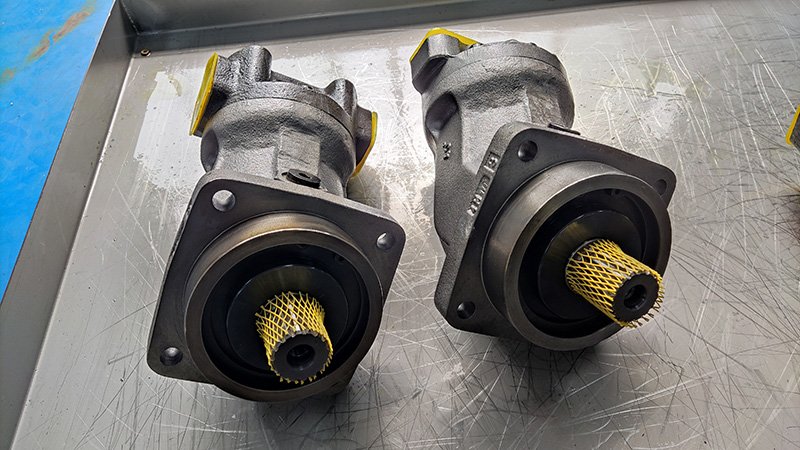
An axial piston pump is a high-performance positive displacement hydraulic pump. It delivers stable high-pressure hydraulic power for construction machinery, mining equipment, and industrial hydraulic stations. Compared with gear pumps and vane pumps, it offers higher pressure resistance, adjustable displacement, and better energy efficiency. This article explains its definition, structure, working principle, key benefits, and typical use cases in detail.
What Is an Axial Piston Pump? Basic Definition
An axial piston pump is a type of positive displacement pump. Its pistons are arranged parallel to the central drive shaft. The pump converts rotational mechanical energy into hydraulic energy through the reciprocating movement of internal pistons.
Unlike radial piston pumps with radially arranged pistons, the axial design features a compact structure and flexible displacement adjustment. It supports both fixed and variable flow output. This makes it the most widely used pump in mobile heavy machinery and automated hydraulic systems.
The core feature of an axial piston pump is its swash plate control system. It changes piston stroke length to adjust flow and pressure, achieving dynamic load matching and energy-saving operation.
Main Components of an Axial Piston Pump
The stable operation of an axial piston pump relies on precise coordination of core components. Each part plays an independent and indispensable role:
- Drive Shaft: Transmits engine or motor power to rotate the cylinder block, providing basic mechanical power.
- Cylinder Block: Equipped with multiple evenly distributed piston bores. It rotates synchronously with the drive shaft.
- Pistons and Slippers: Perform axial reciprocating motion. They complete oil suction and oil discharge through stroke changes.
- Swash Plate: The key adjustable component. Its tilt angle determines piston stroke and directly controls pump displacement.
- Valve Plate: Separates suction and discharge oil channels. It prevents fluid backflow and ensures continuous cyclic operation.
- Return and Sealing Mechanism: Guarantees stable piston reset and overall system tightness to avoid oil leakage.
How Does an Axial Piston Pump Work?
The working principle of an axial piston pump depends on periodic volume changes of sealed piston chambers. The entire working cycle includes two continuous stages.
Oil Suction Stage: When the cylinder block rotates, the swash plate guides the pistons to move outward. The internal chamber volume increases and forms negative pressure. Clean hydraulic oil is sucked into the piston chamber through the suction port.
Oil Discharge Stage: With continuous rotation, the swash plate pushes pistons inward. The chamber volume shrinks rapidly. Hydraulic oil is compressed to form high pressure and discharged to the hydraulic circuit.
Multiple pistons work in staggered cycles. This structure eliminates flow interruption and pressure pulsation, ensuring smooth and stable hydraulic output.
Fixed vs Variable Axial Piston Pumps
Axial piston pumps are divided into two types according to displacement adjustment methods, adapting to different working conditions.
Fixed Displacement Axial Piston Pump: It has a fixed swash plate angle. Its flow output remains stable during operation. It suits equipment with constant load and simple hydraulic demands, featuring low failure rates and easy maintenance.
Variable Displacement Axial Piston Pump: It supports real-time swash plate angle adjustment. It automatically matches flow and pressure according to equipment load changes. It effectively reduces idle power consumption and system heat, making it the mainstream choice for modern intelligent machinery.
Key Advantages of Axial Piston Pumps
Axial piston pumps dominate high-end hydraulic systems due to their outstanding performance advantages:
- High pressure resistance: Stably operates under 280–350 bar, meeting heavy-load working requirements.
- Excellent energy efficiency: Dynamic variable displacement reduces fuel consumption and energy waste.
- Low noise and low vibration: Staggered piston movement ensures smooth system operation.
- Compact and lightweight: Axial layout saves installation space for mobile machinery.
- Long service life: Wear-resistant materials and precise processing reduce internal friction loss.
Common Applications
Axial piston pumps are widely adopted in global engineering and industrial fields. Typical application scenarios include excavators, loaders, cranes, road construction machinery, mining hydraulic equipment, industrial hydraulic stations, and agricultural heavy machinery.
Premium Axial Piston Pumps by Haozheng
As the core power component of hydraulic systems, axial piston pumps directly determine equipment stability and working efficiency. High-quality pump products greatly reduce downtime and maintenance costs.
Haozheng is a professional global manufacturer and supplier of high-performance axial piston pumps. We specialize in producing mainstream series including A10VSO and A11VO variable axial piston pumps. Every product undergoes strict precision processing and full-performance testing before delivery.
Our axial piston pumps feature stable pressure output, accurate displacement control, low vibration, and strong durability. They fully adapt to high-load, high-temperature, and frequent-operation working environments. They can perfectly replace original imported pumps and help global users optimize equipment operating costs.
We provide professional model selection guidance, technical support, global batch supply, and customized services. If you need reliable axial piston pumps or professional hydraulic system solutions, feel free to contact Haozheng for detailed product parameters and official quotations.
มีประโยชน์ AI Hotel Lobby (/) บูธสีส้ม 9:16 AI Hotel Lobby