
Introduction
A radial piston pump is a high-pressure positive displacement hydraulic pump widely recognized for its ultra-high pressure resistance, low flow pulsation, and stable continuous operation. Unlike axial piston pumps with pistons arranged parallel to the drive shaft, radial piston pumps adopt a unique radial layout, where multiple pistons are distributed star-shaped perpendicular to the central shaft. This distinctive structural design enables the pump to withstand extreme working pressures ranging from 400 bar to 700 bar, making it indispensable for heavy-duty industrial hydraulic systems, high-pressure lifting equipment, and precision engineering machinery. To help equipment operators, maintenance technicians, and engineering purchasers fully understand this core hydraulic component, this article comprehensively explains how does a radial piston pump work, along with its internal structure, working process, core advantages, and typical application scenarios.
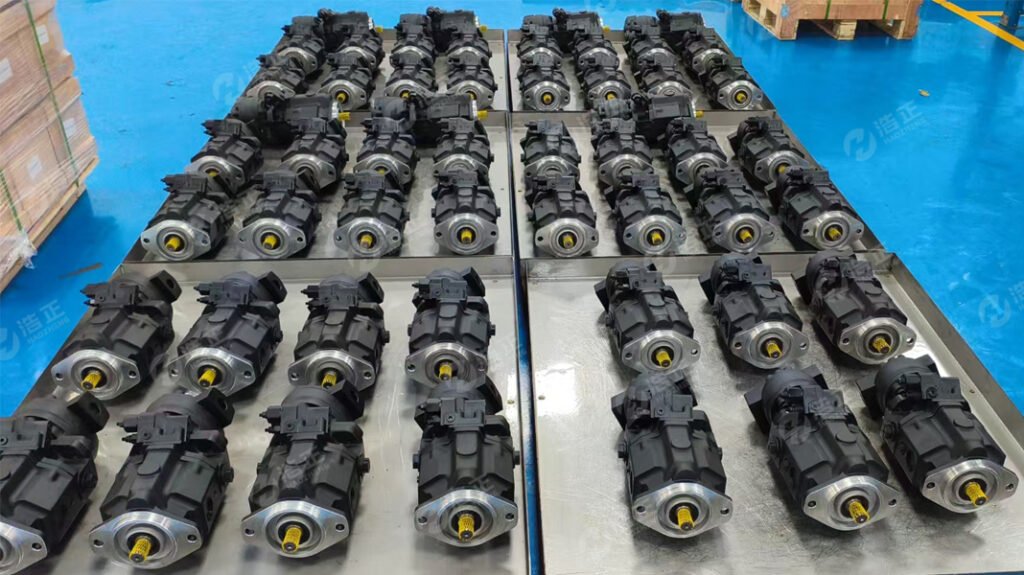
Core Structure of a Radial Piston Pump
The stable operation of a radial piston pump relies on a precise and compact mechanical structure. Each core component coordinates closely to complete fluid suction, pressurization, and discharge. The main structural parts include:
- Eccentric drive shaft: The power input core of the pump. Its eccentric offset converts rotational motion into the radial reciprocating stroke of pistons, which is the fundamental power source for fluid pressurization.
- Rotor cylinder block: Equipped with multiple uniformly distributed radial cylinder bores, each accommodating an independent piston. The rotor rotates synchronously with the drive shaft during operation.
- Pistons and reset springs: Pistons perform linear reciprocating movement in radial cylinder bores. The eccentric shaft pushes pistons inward for pressurization, while high-strength springs reset pistons outward to complete oil suction.
- Cam ring / stator: A fixed outer ring structure that limits the piston movement range and cooperates with the eccentric shaft to control piston stroke length, determining the pump’s displacement and maximum pressure.
- Valve distribution system: Includes suction and pressure oil valves or flow distribution shafts, responsible for precisely separating low-pressure oil suction and high-pressure oil discharge channels to avoid fluid backflow and pressure loss.
- Sealing and housing assembly: Ensures the internal tightness of the hydraulic system, prevents oil leakage, and protects internal precision parts from external dust and impurity erosion.
How Does a Radial Piston Pump Work? Complete Working Process
The working principle of a radial piston pump is based on the volume change of closed hydraulic chambers. Through the eccentric rotation of the drive shaft, pistons complete periodic outward oil suction and inward pressurized oil discharge movements. The entire working cycle is divided into two continuous and synchronous stages, fully explaining how does a radial piston pump work in practical operation:
1. Low-pressure Oil Suction Stage
When the drive shaft rotates, the eccentric part gradually releases the pistons. Driven by the reset spring force, each piston moves radially outward along the cylinder bore. This movement increases the volume of the closed hydraulic chamber inside the cylinder, forming a stable negative pressure vacuum. Under atmospheric pressure, hydraulic oil from the oil tank is filtered and sucked into the cylinder chamber through the suction port of the distribution system. Multiple pistons perform suction actions sequentially, ensuring continuous and stable oil supply without intermittent gaps.
2. High-pressure Oil Discharge Stage
As the drive shaft continues to rotate, the eccentric shaft jacks the pistons inward radially against the spring resistance. The volume of the closed cylinder chamber shrinks rapidly, and the internal hydraulic oil is instantly compressed to form ultra-high pressure. When the pressure exceeds the opening threshold of the pressure oil valve, the high-pressure hydraulic oil is discharged from the oil discharge port and delivered to the hydraulic actuator such as hydraulic cylinders and hydraulic motors. The sequential operation of multiple groups of pistons effectively reduces flow pulsation and realizes stable high-pressure fluid output.
Continuous Cycle Operation
During the continuous rotation of the equipment, the oil suction and oil discharge processes of each piston alternate periodically. The staggered movement of multiple pistons eliminates pressure fluctuation dead zones, enabling the radial piston pump to output constant high-pressure flow stably. Compared with other hydraulic pumps, this cyclic working structure features balanced mechanical force, low vibration, and ultra-high pressure resistance.
Key Features and Advantages of Radial Piston Pumps
Thanks to its unique radial piston layout and eccentric transmission structure, radial piston pumps have irreplaceable performance advantages in high-pressure hydraulic systems:
- Ultra-high pressure resistance: Stable operation under 400–700 bar working pressure, suitable for extreme heavy-load working conditions that axial piston pumps cannot bear.
- Low flow pulsation and high stability: Multi-piston sequential fluid supply ensures smooth hydraulic output, effectively reducing system vibration and noise.
- Strong environmental adaptability: Compact and rigid structure, resistant to high temperature, heavy load, and impurity erosion, suitable for harsh industrial and mining environments.
- Long service life and low failure rate: Balanced mechanical stress distribution reduces component wear, with stable sealing performance and fewer maintenance requirements.
- Precise pressure control: Fixed displacement and optional variable displacement designs support accurate hydraulic pressure regulation, meeting precision equipment operation standards.
Typical Applications of Radial Piston Pumps
Radial piston pumps are widely used in industrial scenarios requiring ultra-high pressure and stable hydraulic power, covering multiple fields worldwide:
- Heavy industrial equipment: High-pressure hydraulic presses, forging machinery, and metal forming equipment;
- Engineering and mining machinery: Mine support hydraulic systems, drilling equipment, and heavy lifting platforms;
- Special precision equipment: Aerospace hydraulic systems, automobile detection and calibration equipment;
- Hydraulic station supporting systems: Fixed high-pressure hydraulic power units for industrial production lines.
High-Quality Radial Piston Pump Solutions From Haozheng
Haozheng is a professional global manufacturer and supplier of high-pressure hydraulic piston pumps, focusing on the R&D, production, and customization of radial piston pumps and supporting hydraulic components. With advanced precision processing technology and strict full-process quality inspection standards, our radial piston pumps deliver stable ultra-high pressure output, low pulsation operation, and strong durability, fully adapting to various heavy-duty and harsh working environments.
Our radial piston pump products feature compact structure, high pressure resistance, low wear, and easy maintenance. They are perfectly compatible with mainstream industrial high-pressure hydraulic systems and can fully replace imported original pumps, effectively reducing equipment operation and maintenance costs for customers. We support standard model supply and customized parameter production to meet the diverse needs of industrial production, engineering machinery, and mining equipment.
Adhering to professional technical services and reliable product quality, Haozheng provides one-stop solutions including model selection guidance, technical consultation, global batch supply, and after-sales support. Our products are exported to Europe, Russia, Southeast Asia, and other regions. If you need to purchase high-performance radial piston pumps or obtain professional hydraulic system matching suggestions, please contact our team for detailed product parameters, quotations, and technical support.